Table Of Content
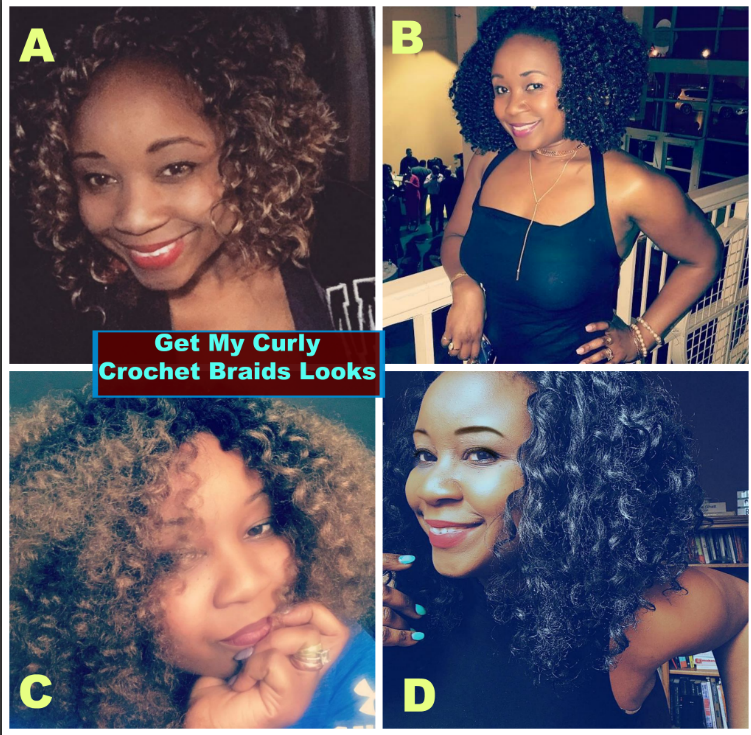
"I recommend looking for a curl gel to hydrate and define curls, especially a water-based option that has a buildable, light hold. "Hair typing is a starting point, an easy way to start wading through the many product and styling options," says Breyer. "We mean it to be a reference guide, not a way to separate people into different groups." According to her, here are the nine types of curls and their characteristics. Hair thickness is the actual diameter of each strand of hair, while your hair density refers to the closeness of your hair follicles. After following these steps, you should have an idea on what your natural curl pattern is.
Type 3 Curly Hair
Type 3C was created after Andre Walker released his hair typing system by a community member at NaturallyCurly.com. Unfortunately, many people believe that Andre’s Hair Typing System is hierarchical and intentionally places kinky hair in the bottom (“worst”) category. We don’t endorse or recommend any particular hair typing system. However, we recognize that the system created by Andre Walker is substantially more popular well-known, and communicated than the other hair typing systems. Sabina (she/her) is the director of the Beauty, Health & Sustainability Lab at the Good Housekeeping Institute, where she has overseen skincare, haircare and makeup testing since 2012.
Best Hair Oil: Ranavat Might Majesty Fortifying Hair Serum
Oribe Curl Control Silkening Cream, CurlSmith Weightless Air Dry Cream, or Ceremonia Pequi Curl Activator are all great options. Once you’ve applied your products of choice, you can either let hair air dry, or opt to use a diffuser to speed up the process. However, you should “always use heat protection, like [Curlsmith’s] Miracle Shield before diffusing your locks,” Butcher suggests.
Type 3B
The main difference between 3c and 4a hair is that 4a hair needs a significant amount of moisture and benefits greatly from extra hydration. This could mean extra deep conditioning or styling hair with protective styles to keep the moisture locked in the strands. A curl pattern refers to the shape and structure of the natural curls or waves in your hair.
What is hair type vs curl pattern?
It’s important to find a stylist who has experience with curly hair to ensure that the haircut is done correctly. After getting a haircut, it’s important to maintain healthy curls by using products that are specifically designed for curly hair, avoiding heat styling tools, and regularly deep conditioning. To determine your curl type, observe your hair’s natural texture, examine the shape of your curls, and consider factors like humidity and product usage. Remember that most people have more than one type of pattern on their head so that you may have a combination of kinky, coily, wavy, and curly. Once you’ve identified your curl type, you can care for and style your hair accordingly.
How Do You Determine Your Hair Type?
The key to growing your hair faster is taking your hair type into consideration. The type of hair you have plays a huge role in your hair length—or at least how long it appears to be. To help you learn all there is to know about how hair type affects hair length, we’ve created a hair length chart. Keep reading, because we’re schooling you on how to understand it so that you’re equipped with everything you need to know in order to achieve those lovely lengths you’re after.

Coily Hair Textures
For example, a person with type 2A hair would have wavy hair with a definite but loose S-shaped pattern and subtle, tousled texture. Someone with type 3C hair would have tight, corkscrew-like curls about the width of a pencil. Since the strands are not really defined as curls, this hair type is commonly mistaken for frizzy hair. “Avoid using heavy products that could weigh down your locks,” explains Butcher.
Type 4 hair also generally has low porosity, which means it can’t absorb moisture well. When weighed down, the hair tends to look more like a type 2c wave. If you decide to put your hair up, try to avoid super tight styles. “The tension can lead to breakage, soreness, and, in extreme cases, traction alopecia,” explains Butcher.
Dove Nutritive Solutions Daily Moisture 2-In-1 Shampoo &Amp; Conditioner
At NaturAll, we create and elevate clean haircare and beauty standards, providing freshly-made products that are better for you and your hair. We source ingredients directly from small farmers in Jamaica and Ghana, so we always know how our ingredients are sourced and exactly who is being supported by our business. We are proud to support Black farmers and small businesses around the world.
How to Use Flexi Rods on Natural Hair in 2022 - Cosmopolitan
How to Use Flexi Rods on Natural Hair in 2022.
Posted: Mon, 12 Apr 2021 07:00:00 GMT [source]
This hair type is also sensitive to a lot of heat damage, where over-manipulation, coloring and heat tools can disrupt the curl pattern, making it difficult, if not impossible, to revert. This hair has the least defined curls among the type 3 curl patterns, and thus, it’s also easily weighed down by hair products. There are many hair-typing systems out there, and many people also argue that curl pattern doesn’t matter. We think it matters because the way one woman pineapples her Type 3c curls at night may not work for another’s Type 3a hair.
Type 3C hair is characterized by tight, corkscrew curls that have a more coiled or zigzag pattern than Type 3B hair. This hair type tends to be very thick and coarse in texture, and can be prone to dryness and frizz. To care for 3C hair, it’s important to use moisturizing products that provide definition and hold without weighing the hair down. Type 3B hair is characterized by tight, corkscrew curls that have a more coiled or springy pattern than Type 3A hair. This hair type tends to be thicker and coarser in texture, and can be prone to dryness and frizz. To care for 3B hair, it’s important to use moisturizing products that provide definition and hold without weighing the hair down.
To make matters easier, NaturallyCurly created an online quiz to easily help women identify their natural curl type. Curls resemble tight corkscrews and are approximately the circumference of a pencil or straw. Type 3c hair tends to be higher in density and coarser than Type 2 or 3 hair. It's the tightest curl of the hair types and is prone to being super dry—but you also don't want to overload it with oils and butters, as it can weigh down your hair. Curls are more voluminous and have a smaller circumference than Type 3a curls—the size of a Sharpie marker. This hair type usually is very voluminous and has very defined curls.
Understanding porosity levels can help in choosing the right products for curly hair. Remember that no curl is the same, and having many different curl types is completely normal and what makes our hair unique. By understanding your curl type, you can select the best products, treatments, and styling techniques to enhance and define your curls.


No comments:
Post a Comment